Monday, January 28, 2008

Matthew Pearl, The Dante Club

The Dante Club is a great story of murder and intrigue set in Boston and Cambridge at the close of the Civil War. It features literary greats Henry Wadsworth Longfellow, James Russell Lowell, and Oliver Wendell Holmes, among others, and creates a fascinating world in which the world of Dante's Divine Comedy comes alive.

Dante's classic work of poetry has gone largely unnoticed in the United States, and the legendary poet Longfellow sets out to change that by completing a translation of Dante's poem into English. For this task, he gathers a group of scholars and Dante lovers around him, "the Dante club," which includes Lowell, Holmes, publisher J. T. Fields, and George Washington Green. As they methodically work through the cantos of Dante's journey through hell, first one murder, then two more pop up with some very odd features. And only the Dante club members can recognize the common links. Each murder enacts a punishment from Dante's hell: a judge is eaten with maggots, a priest is buried alive with his feet set on fire, a businessman is splayed alive. So the club must try to figure out who would know about Dante and be strategically choosing these people for their punishments. Meanwhile, the Harvard Corporation has given increasing attention to the new interest in Dante, and August Manning, the head of the board, is concerned about giving attention to foreign poetry instead of American literature. So the Corporation is focusing attention on discouraging the publication of Dante's work and the study of it in classes. And the Dante Club members come to realize that the killer, whom they have labeled "Lucifer," has been committing the murders at the same pace as their work on the various cantos of Dante's work, and they begin to realize that the murders are being committed to defend Dante, and thus also to defend their work.

The men discover that Dan Teal, an assistant at the publishing house and also a janitor at Harvard, has just the right information and opportunity, and that this Civil War vet is the one behind the murders. With the help of Detective Nicholas Rey, the Club is set on a chase through Boston and Cambridge, trying to prevent more murders, and also to save themselves from falling victim to his plot. In a chase that goes from the underground slave tunnels to the frozen lake, Longfellow, Lowell, and Holmes track down Lucifer and prevent any more punishments.

Pearl has written a great piece of fiction. But he is also a Dante expert, and it is there that the book gains depth. He helps illumine Dante and his work by setting this great mystery in the Civil War era, helping to illumine the parallels between nineteenth-century America and thirteenth-century Italy, with Dante disillusioned by civil war and pervasive death in the world around him. Pearl also helps give a sense of how Dante not only peopled hell with classical figures from past literature and myth but also with his own countrymen, on both sides of the conflict, to show the futility of the battles and the pervasiveness of wrongdoing. I was many times driven back to Dante to look over his colorful journey, all the while enjoying a good murder mystery with some colorful and interesting characters. Well worth reading.

Friday, January 18, 2008

Gordon Fee, Paul's Letter to the Philippians

Paul's Letter to the Philippians by Gordon Fee is in the New International Commentary on the New Testament (NICNT) series published by Eerdmans. In this important commentary on this gem of a letter, Fee delves deeply into Paul's thought and Paul's world. I deeply enjoyed reading Fee's exposition, and was continually challenged by Paul's deep faith and his unflagging focus on Jesus Christ.

Fee surveys the important issues in the interpretation of Philippians, in constant dialogue (mostly in the notes) with other important commentators, and especially with O'Brien (NIGTC on Philippians), Silva (BECNT on Philippians), R. P. Martin, and Karl Barth, to name a few. But his commentary never gets bogged down in scholarly minutia. While he engages the pertinent issues, he almost entirely leaves his thoughtful technical discussions for the notes, where interested parties can easily find them, but where they can be left to the side to keep the focus on Philippians itself.

Fee looks at the question of the setting of the letter, and leans toward the more traditional view of Paul's Roman imprisonment as the setting (as opposed to either Caesarea or Ephesus, the latter of which has gained a good bit of attention in recent years), though the decision doesn't have much significance for understanding the letter itself. Of the more substantive matters in the letter, the "Christ Hymn" in Phil 2:5-11 has gained a mountain of scholarly attention, and Fee's careful discussion of that passage is insightful and fresh. He argues, against the tide of most modern scholarship, that the "hymn" really isn't a hymn at all, but a Pauline composition integral to the letter, even if poetic in form. And above all, he stresses that regardless, it should be treated as fully endorsed by Paul and integral to the letter, wherever one stands on its origin: Paul included it here for a reason, and it wasn't merely to give us a window into earlier hymnody.

With regard to the interpretation of the letter as a whole, Fee argues that it is a letter of friendship, and that this designation illumines many of the discussions throughout the letter, and especially the more "formal" elements at the beginning and end. This friendship can also be seen throughout in what he describes as a three-way bond between the Philippian believers, Paul, and Christ, which informs many of Paul's discussions and admonitions. As to the content of the letter itself, Fee sees steadfastness (in face of persecution and trial), unity (in face of challenges both within and without), and the unswerving focus on the gospel (living in Christ through the Spirit) as the three recurring themes and ongoing emphases throughout the letter.

There is far too much to comment on in a short review, but this great book deserves reading from cover to cover. Philippians, though not often seen as integral to understanding Paul's theology, is a very important window into Paul's heart. This volume is a great study of this short letter. It also reminds me that I really enjoy the NICNT series. It has great in-depth study of the text and the important exegetical issues, while keeping the discussions of Greek words to the notes. And the authors usually include a relatively brief reflection on the continuing significance or application of a passage to today at the end of each section. This volume, by the current editor of the series, shows why this tends to be the first place I go for NT scholarship.

Tuesday, January 08, 2008

Richard Bauckham, Jesus and the Eyewitnesses

Jesus and the Eyewitnesses is a ground-breaking study by NT scholar Richard Bauckham that questions many of the assumptions current in much New Testament scholarship today, especially about the formation of the Gospels. In this seminal book, Bauckham makes a sustained case for the involvement and centrality of eyewitnesses in the formation of the Gospels as they appear in their current, written canonical form. I won't attempt to recreate his arguments here, for they are many and detailed, but he covers evidence from other ancient historiographies about method, he looks at the statistical prevalence of names in the Gospels verses their known prevalence in the ancient world, and he studies the literary cues from within the Gospels themselves. He also looks very carefully at the earliest testimonies from outside the Gospels about their origin, espeically Papias, Eusebius, Iranaeus, and Polycrates.

A second major thrust of all of this, and maybe the most essential part of the entire book, is his sustained case, summarized and carefully argued in chapter 11, "Transmitting the Jesus Traditions, but supported by work in other chapters as well, is an alternative account of the origin and transmission of the traditions about Jesus and how they came to be written down. It is essentially a sustained (and I believe devastating) critique of form criticism, with its assumption of a long history of traditions and anonymous transmission of various "forms." His critique of form criticism is many-fold, but a few of its highlights are the emphasis on the relatively short period of time between Jesus' life and the writing of the Gospels, and even more especially, as the title of the book betrays, on the involvement of guarantors of the various traditions, which remained in many or even most cases, connected with certain named and known individuals.

He then spends a significant bit of the later portion of the book focusing on issues of authorship in John's Gospel, helpfully illuminating the history of scholarship about authorship, and looking carefully at the claims made by John's author, and also by looking at the early evidence, especially in Polycrates and Papias, about who this certain John was, concluding that the author of John was John "the Elder," a different John than the son of Zebedee, and that this John is in fact the beloved disciple, who later lived in Ephesus, and whose testimony was know at second hand by Papias, and who wrote down his account in his Gospel.

I estimate Bauckham's work to be a monumental achievement of scholarship, and I am hopeful that it will make significant waves in Gospels scholarship in the coming years. It is certainly a force to be reckoned with. Now, I don't expect all of his proposals will meet immediate approval by the guild, but I do think the broad scope of his argument, espeically as to the weakness of many of the assumptions linked with form criticism and still mostly current in Gospels scholarship today, even if beneath the surface, will help bring to light the need to reevaluate the types of documents that the Gospels in fact are. While Bauckham certainly doesn't provide evidence to in some way guarantee the accuracy and validity of the Gospels, he does give a very compelling case for linking the documents with certain named eyewitnesses, including but certainly not limited to the Twelve, among others. It is a very interesting and readable offering in NT scholarship, and one that I highly recommend. I think, along with works like J. D. G. Dunn's Jesus Remembered, Bauckham's work will help continue turning the tide toward reevaluating the relationships between the Gospels themselves and the nature of their development.

Saturday, January 05, 2008

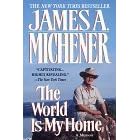
James Michener, The World Is MY Home

The World Is MY Home as a memoir by the very interesting and prolific author, James Michener, in which he thematically collects his thoughts and reminiscences. It chronicles much of his early life, his rise to fame with an unexpected Pulitzer Prize, and his thoughts about publishing, books, and quite a variety of other subjects. Though it does tell much of the story of his life, it is most certainly not an autobiography, though that too would undoubtedly make for fascinating reading. Instead it is more reflections on his life as a writer and the craft of writing, and also serves as a bit of an apologia for the rather unconventional type of fiction that became his stock in trade. It makes for an interesting window into Michener's world, even if it does turn a bit dry at points.

Sunday, December 09, 2007

Donald Bloesch, A Theology of Word and Spirit

A Theology of Word and Spirit is the first volume in Bloesch's Christian Foundations series, a seven-volume systematic theology. In it he outlines the methodology behind his theology, looking at a umber of important issues in the way theology is done.

Bloesch takes on some very important theological issues in this opening volume of his series, such as the role of rationality and the mind in faith and the place of natural theology. His discussions are much too comprehensive to simply summarize here, but we can at least illumine a few of his main themes. One of the most important is his understanding of the role of the mind in faith, what he calls "fedeistic revelationalism," a position that intentionally stands between "fedeism" (faith is an act of the will apart from rational thought, or in fact an irrational decision) and "rationalism" (faith is a reasoned decision based on the evidence). For Bloesch, both of these positions preserve important facets of how we believe, but also distort the truth of the gospel. Bloesch emphasizes that faith is a response to God's revelation, not simply a summing up of the evidence, nor a decision that is made completely without warrant. God's Spirit plays a key role in this whole process. This points to another important theme in Bloesch's theology, that it is a theology "of Word and Spirit." He is committed to a theology that is anchored to God's Word, Jesus Christ, revealed in Scripture, and always gives full credit to the moving of God's Spirit, who illumines God's words and guides God's people. This makes for a theology that is Christ-centered, Scripture-based, and always sensitive to God's Spirit.

Bloesch is a "mediating theologian," an evangelical that finds himself in between the progressive theology of liberalism and the conservatism of much evangelical theology. In his irenic theology, he dialogues with both, but points out extremes and misunderstandings in both systems of theologizing. His theology shows much evidence of the stamp of Karl Barth, and in many ways it is an "evangelical" morphing of Barth's theology, especially as it is an outworking of Barth's threefold doctrine of the Word of God. In many ways, I think this is a profound strength, in carrying out a profoundly evangelical theology that is based on God and his revelation found in his Word, instead of based primarily on a rationalistic doctrine of Scripture. Bloesch can uphold the importance of Scripture as a locus of God's revelation and the norm for theology without flirting with bibliolotry. How successful he is will have to be decided after a more careful look at the second volume of his Christian Foundations on Holy Scripture.

Over all, Bloesch's A Theology of Word and Spirit is a very worth-while exercise in theology. It gives evidence of a lifetime of prayerful reflection on these things, and is truly a mature theology that is aware of the great thinkers of theology through the centuries.

Tuesday, November 13, 2007

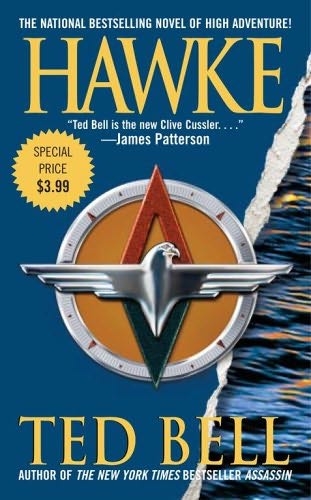
Ted Bell, Hawke


Ted Bell's Hawke is an adventure-filled novel of espionage and intrigue. Bell writes very much in the mold of Clive Cussler, with a wealthy, world-traveling hero fighting crime as a hobby. The story involves a plot by three Cuban brothers to seize Cuba from Castro and then, with the help of a secret Russian sub, to hold the world at bay. It turns out that these three brothers are the same people who killed Hawke's parents when he was a child, while he looked on from a secret cabinet in their family's yacht. So Hawke's defeat of the plot is also a personal vindication.

The book was a fun read, with many ups and downs and lots of adventure, though it was often pretty far fetched, again, in the mold of Clive Cussler. But an enjoyable romp, none the less.

Sunday, November 04, 2007

Scot McKnight, Jesus and His Death

In Jesus and His Death, Scot McKnight undertakes a historical look at how Jesus understood his own death. He begins with a study of the "historiography" of Jesus studies, looking at the historical methods currently in use, often in the background, in studies about Jesus and the New Testament, broadly categorizing them as modernist or postmodernist in orientation. After surveying this turf, he goes on to investigate how Jesus' death has been understood in modern studies of Jesus, largely concluding that in many cases Jesus' death is a neglected or at least under-emphasized facet of his life. (Which, this seems odd considering it's prominence in Paul's theology; though on the other had that might partly explain it, considering the orientation of many of the Jesus studies these days.) He then goes on in chapter three to "reclaim" Jesus death as an important focus of study.

Part two of his book is an initial investigation into the role Jesus' death played in h is life. He begins by looking at the question of whether Jesus expected a premature death, concluding minimally that after John the baptizer's death, it couldn't have been far from Jesus mind; that is, his own death was a possibility. But he begins building from that point by moving on to consider whether Jesus considered it more than mere possibility, but also a probability; was it something he expected? To investigate this question, McKnight surveys many strands of the Gospel narratives, making the argument that though Jesus didn't want to die, he came to see it as a likely outcome of his ministry, and that he expressed this as having a "temporary presence" with his disciples, and further, that he saw his likely death as part of the Final Ordeal, infusing it with eschatological significance, even to the point of seeing his death as representative for his followers.

Part three of McKnight's study focuses more specifically on how Jesus understood his own death as atoning, and specifically if he understood it as a ransom. This focuses the discussion on Mark 10:45, the saying about Jesus' death being a ransom for many. In this investigation he looks at allusions to Isaiah, the context of the saying, and many other factors in evaluating the authenticity of the saying. And the verdict isn't clear. The possibility that it is a later addition is strong. So this leads McKnight to investigate the remainder of the Jesus tradition to see if the saying gains support from other places as something Jesus would have said. This includes looking at how Jesus understood his own role (was it like Isaiah's servant, a role that would point toward "ransom" language or more like a son of man or some other mold?), concluding that servant imagery didn't play a prominent role in Jesus' self-understanding, but that son-of-man imagery was prominent. His investigation continues, with studies of other "scripture prophets" to whom Jesus can be compared, and with the passion predictions. Then, in part four, he undertakes an in-depth study of the last supper traditions, to shed some light on how Jesus understood his life and death.

Ultimately, McKnight concludes that the ransom saying in Mark 10:45 is likely a Markan gloss, and that Mark indeed understood Jesus' death as a ransom for many, paying the price to liberate Jesus' followers from a hostile power. So what of Jesus and his death? His first emphasis is that "Jesus' mission is more than a 'mission to die'" (336). Though it indeed turned out to also be that. Jesus called on God to avoid his upcoming death, but ultimately saw it as his own role in God's providence. So what of atonement? Jesus saw his death as a representative death, having value for his followers, and probably even as vicarious, taking the place of others. This is intimately caught up with the fact that his death was part of the "Final Ordeal," the inbreaking of God's kingdom into the present and the fulfillment of God's plans for the world.

But more must be said. The early church didn't confine it's reflection of Jesus' death to these themes, but plumbed the depths of Scripture and reflected on Jesus' life and death to come up with deep, rich, and varied expressions of the significance of Jesus death. And McKnight finishes up his book surveying these developments. In the end, he points beyond the "how" of atonement to the "whereunto": "the design of the atonement," he writes, "is to create a community, an ecclesia, a koinonia, a zoe, a new creation" (371). That is where he sees the center of the New Testament's message about Jesus and his death, a message that goes back to Jesus himself. Jesus death "would protect them, liberate them, and usher them into the kingdom of God" (372). That's a pretty robust place to start in reflecting on the atonement.

Thursday, October 18, 2007

Eugene Peterson, Eat This Book

In Eat This Book, Peterson continues the work he began in his masterful Christ Plays in Ten Thousand Places to construct a "spiritual theology." And in this book, he takes up "spiritual reading." Peterson guides into an intentional encounter with the Bible by focusing not just on the fact that we read the Bible, but in focusing on how.

Peterson's focus can be summed up by the guiding metaphor that gives the book its title: eat this book. The metaphor comes from the book of Revelation, where an angel tells John the Seer to eat the scroll he gives him containing God's word. Peterson molds this rather cryptic command into a well-shaped image of how we should take the Bible in when we read it. Scripture isn't for external study, for quantifying or disecting, but it is first and foremost for taking in, digesting, and living.

Near the end of the book, Peterson contrasts two types of readings of the Bible, when he says that instead of treating the Bible as a "thing, an impersonal authority . . . to define or damn others" we should deal "with God's word in a personal, relational, and obedient way." This means acknowledging that it contains "words that mean, that reveal, that shape the soul, that generate saved lives, that form believing and obedient lives" (139-40). This is the journey he leads us on through this book. First recognizing that the Bible reveals a "strange new world," to use Barth's idea, and that we need to enter that world and be shaped by it. So he teaches us how to do that, by being carefully attuned listeners, obedient listeners.

I highly recommend this book. It has rekindled in me a passion for reading God's word, and helped remind me of how I should be doing it and why. We read God's word to be formed by it, and Peterson helps bring this home. Do not miss this book.