Sunday, December 09, 2007

Donald Bloesch, A Theology of Word and Spirit

A Theology of Word and Spirit is the first volume in Bloesch's Christian Foundations series, a seven-volume systematic theology. In it he outlines the methodology behind his theology, looking at a umber of important issues in the way theology is done.

Bloesch takes on some very important theological issues in this opening volume of his series, such as the role of rationality and the mind in faith and the place of natural theology. His discussions are much too comprehensive to simply summarize here, but we can at least illumine a few of his main themes. One of the most important is his understanding of the role of the mind in faith, what he calls "fedeistic revelationalism," a position that intentionally stands between "fedeism" (faith is an act of the will apart from rational thought, or in fact an irrational decision) and "rationalism" (faith is a reasoned decision based on the evidence). For Bloesch, both of these positions preserve important facets of how we believe, but also distort the truth of the gospel. Bloesch emphasizes that faith is a response to God's revelation, not simply a summing up of the evidence, nor a decision that is made completely without warrant. God's Spirit plays a key role in this whole process. This points to another important theme in Bloesch's theology, that it is a theology "of Word and Spirit." He is committed to a theology that is anchored to God's Word, Jesus Christ, revealed in Scripture, and always gives full credit to the moving of God's Spirit, who illumines God's words and guides God's people. This makes for a theology that is Christ-centered, Scripture-based, and always sensitive to God's Spirit.

Bloesch is a "mediating theologian," an evangelical that finds himself in between the progressive theology of liberalism and the conservatism of much evangelical theology. In his irenic theology, he dialogues with both, but points out extremes and misunderstandings in both systems of theologizing. His theology shows much evidence of the stamp of Karl Barth, and in many ways it is an "evangelical" morphing of Barth's theology, especially as it is an outworking of Barth's threefold doctrine of the Word of God. In many ways, I think this is a profound strength, in carrying out a profoundly evangelical theology that is based on God and his revelation found in his Word, instead of based primarily on a rationalistic doctrine of Scripture. Bloesch can uphold the importance of Scripture as a locus of God's revelation and the norm for theology without flirting with bibliolotry. How successful he is will have to be decided after a more careful look at the second volume of his Christian Foundations on Holy Scripture.

Over all, Bloesch's A Theology of Word and Spirit is a very worth-while exercise in theology. It gives evidence of a lifetime of prayerful reflection on these things, and is truly a mature theology that is aware of the great thinkers of theology through the centuries.

Tuesday, November 13, 2007

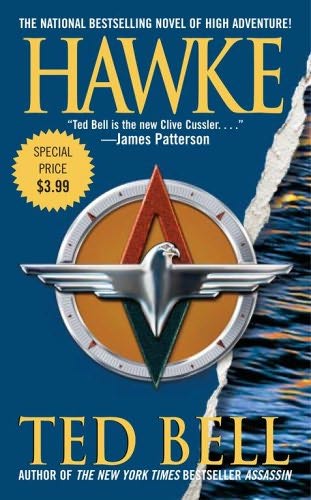
Ted Bell, Hawke


Ted Bell's Hawke is an adventure-filled novel of espionage and intrigue. Bell writes very much in the mold of Clive Cussler, with a wealthy, world-traveling hero fighting crime as a hobby. The story involves a plot by three Cuban brothers to seize Cuba from Castro and then, with the help of a secret Russian sub, to hold the world at bay. It turns out that these three brothers are the same people who killed Hawke's parents when he was a child, while he looked on from a secret cabinet in their family's yacht. So Hawke's defeat of the plot is also a personal vindication.

The book was a fun read, with many ups and downs and lots of adventure, though it was often pretty far fetched, again, in the mold of Clive Cussler. But an enjoyable romp, none the less.

Sunday, November 04, 2007

Scot McKnight, Jesus and His Death

In Jesus and His Death, Scot McKnight undertakes a historical look at how Jesus understood his own death. He begins with a study of the "historiography" of Jesus studies, looking at the historical methods currently in use, often in the background, in studies about Jesus and the New Testament, broadly categorizing them as modernist or postmodernist in orientation. After surveying this turf, he goes on to investigate how Jesus' death has been understood in modern studies of Jesus, largely concluding that in many cases Jesus' death is a neglected or at least under-emphasized facet of his life. (Which, this seems odd considering it's prominence in Paul's theology; though on the other had that might partly explain it, considering the orientation of many of the Jesus studies these days.) He then goes on in chapter three to "reclaim" Jesus death as an important focus of study.

Part two of his book is an initial investigation into the role Jesus' death played in h is life. He begins by looking at the question of whether Jesus expected a premature death, concluding minimally that after John the baptizer's death, it couldn't have been far from Jesus mind; that is, his own death was a possibility. But he begins building from that point by moving on to consider whether Jesus considered it more than mere possibility, but also a probability; was it something he expected? To investigate this question, McKnight surveys many strands of the Gospel narratives, making the argument that though Jesus didn't want to die, he came to see it as a likely outcome of his ministry, and that he expressed this as having a "temporary presence" with his disciples, and further, that he saw his likely death as part of the Final Ordeal, infusing it with eschatological significance, even to the point of seeing his death as representative for his followers.

Part three of McKnight's study focuses more specifically on how Jesus understood his own death as atoning, and specifically if he understood it as a ransom. This focuses the discussion on Mark 10:45, the saying about Jesus' death being a ransom for many. In this investigation he looks at allusions to Isaiah, the context of the saying, and many other factors in evaluating the authenticity of the saying. And the verdict isn't clear. The possibility that it is a later addition is strong. So this leads McKnight to investigate the remainder of the Jesus tradition to see if the saying gains support from other places as something Jesus would have said. This includes looking at how Jesus understood his own role (was it like Isaiah's servant, a role that would point toward "ransom" language or more like a son of man or some other mold?), concluding that servant imagery didn't play a prominent role in Jesus' self-understanding, but that son-of-man imagery was prominent. His investigation continues, with studies of other "scripture prophets" to whom Jesus can be compared, and with the passion predictions. Then, in part four, he undertakes an in-depth study of the last supper traditions, to shed some light on how Jesus understood his life and death.

Ultimately, McKnight concludes that the ransom saying in Mark 10:45 is likely a Markan gloss, and that Mark indeed understood Jesus' death as a ransom for many, paying the price to liberate Jesus' followers from a hostile power. So what of Jesus and his death? His first emphasis is that "Jesus' mission is more than a 'mission to die'" (336). Though it indeed turned out to also be that. Jesus called on God to avoid his upcoming death, but ultimately saw it as his own role in God's providence. So what of atonement? Jesus saw his death as a representative death, having value for his followers, and probably even as vicarious, taking the place of others. This is intimately caught up with the fact that his death was part of the "Final Ordeal," the inbreaking of God's kingdom into the present and the fulfillment of God's plans for the world.

But more must be said. The early church didn't confine it's reflection of Jesus' death to these themes, but plumbed the depths of Scripture and reflected on Jesus' life and death to come up with deep, rich, and varied expressions of the significance of Jesus death. And McKnight finishes up his book surveying these developments. In the end, he points beyond the "how" of atonement to the "whereunto": "the design of the atonement," he writes, "is to create a community, an ecclesia, a koinonia, a zoe, a new creation" (371). That is where he sees the center of the New Testament's message about Jesus and his death, a message that goes back to Jesus himself. Jesus death "would protect them, liberate them, and usher them into the kingdom of God" (372). That's a pretty robust place to start in reflecting on the atonement.

Thursday, October 18, 2007

Eugene Peterson, Eat This Book

In Eat This Book, Peterson continues the work he began in his masterful Christ Plays in Ten Thousand Places to construct a "spiritual theology." And in this book, he takes up "spiritual reading." Peterson guides into an intentional encounter with the Bible by focusing not just on the fact that we read the Bible, but in focusing on how.

Peterson's focus can be summed up by the guiding metaphor that gives the book its title: eat this book. The metaphor comes from the book of Revelation, where an angel tells John the Seer to eat the scroll he gives him containing God's word. Peterson molds this rather cryptic command into a well-shaped image of how we should take the Bible in when we read it. Scripture isn't for external study, for quantifying or disecting, but it is first and foremost for taking in, digesting, and living.

Near the end of the book, Peterson contrasts two types of readings of the Bible, when he says that instead of treating the Bible as a "thing, an impersonal authority . . . to define or damn others" we should deal "with God's word in a personal, relational, and obedient way." This means acknowledging that it contains "words that mean, that reveal, that shape the soul, that generate saved lives, that form believing and obedient lives" (139-40). This is the journey he leads us on through this book. First recognizing that the Bible reveals a "strange new world," to use Barth's idea, and that we need to enter that world and be shaped by it. So he teaches us how to do that, by being carefully attuned listeners, obedient listeners.

I highly recommend this book. It has rekindled in me a passion for reading God's word, and helped remind me of how I should be doing it and why. We read God's word to be formed by it, and Peterson helps bring this home. Do not miss this book.

Thursday, September 13, 2007

John Grisham, The Innocent Man

Grisham's latest legal thriller, The Innocent Man, is a work of non-fiction. In it, Grisham brings to life the story of Ron Williamson, a troubled young baseball star who is convicted for the brutal rape and murder in Ada, Oklahoma. Grisham follows this true story of a brutal rape and murder in a small town. Progress on the investigation is slow, but finally, after a couple years, suspicion comes to rest on two men, Ron Williamson and his friend Dennis Fritz, and they are arrested for the murder. And after a closely-watched trial, are convicted, and Ron is sentenced to death. Meanwhile, the killer, whose name was in the police record from the first night, still hasn't even been interviewed by the police.

It is sometimes said that truth is stranger than fiction, and this book illustrates it. One would continually get the feeling that Grisham was stretching things too far--police wouldn't be so misguided; one person's life couldn't be so tragic--except that it is true. The crime scene investigator exhumes the victim's body a couple of years after her death to try a new match with a bloody palm print found at the scene. The first time it was compared with the victim, shortly after her death, it was ruled that it couldn't be hers. But after a couple years, the examiner decides that the smudged palm print does in fact match with the print of the exhumed body (meaning it's not the print of a suspect, which is significant since it doesn't match up with any of their suspects, including Ron or Dennis), and go on to arrest their two suspects. The miscarriage of justice continues throughout the trial phase, with hearsay and supposition leading to conviction and death sentence.

Only after many years in jail, and a very perceptive legal clerk and justice finally noticing the weakness of the case as it makes its way through the mandatory appeals process does the truth come out. And Ron, a man who has lived for years in horrible conditions on death row, is finally freed.

Grisham's book is a good one, and it can favorably stand up to comparison with is fiction. But it also raises some important questions. First, Ron wasn't able to afford the quality of defense that could counter the resources of the prosecution, especially when it came to expert witnesses and forensic evidence, so how does our legal system ensure a fair trial. Second, what do we do with people who are innocent but convicted? And, even more importantly, how do we insure that innocent people don't end up on death row (at this same time another pair from the same town ended up on death row while also innocent of their crimes)? It's some good food for thought about the death penalty itself . . . what is the price for killing innocent people? Is it too high for the state and for our society?

The Innocent Man is a great read, detailing a dramatic and often painful miscarriage of justice in a small town. It raises great issues and also helps get into the life of one troubled man in a troubled town.

Wednesday, September 12, 2007

Christopher J. H. Wright, The Mission of God


What is the Bible all about? Is it a random collection of writings about people who have experienced God? Is it one story about Israel and another somehow connected story about Jesus? In this masterful work, Christopher Wright sets out to demonstrate that the Bible, from start to finish, can be read as focusing on God's mission: in both the Old and New Testaments, God is on the move.

The depth of Wright's book is too much to summarize here, beyond surveying the ground he covers and discussing a few of the high points along the way. He begins by discussing hermeneutics, that is, how we read the Bible and what we see when we do, and the argument he makes there is that instead of mining the Bible for insights about "missions," we should instead look for God's mission that permeates the pages of the Bible. It's not about searching for texts that tell us to go to the nations, but instead about being attuned to what God is doing and finding our part in it.

To flesh out this them, and to demonstrate how it is one way of showing the unity of the Bible, Wright begins with God, looking at who God revels himself to be and what God reveals himself to be doing in the world. This involves especially the fundamental notion of God's uniqueness, the foundation of biblical monotheism. The second foundational idea about God is that God wants to be known by that which he has created. God has revealed himself in many and various ways. The final investigation Wright undertakes with regard to God's identity is an extended investigation into the theme of idolatry, a major theme especially of the Old Testament, where he demonstrates that the constant prohibitions of idolatry over and over show God's desire to be known and Israel's conviction (though often forgotten) that God is the only true God.

After establishing who God has revealed himself to be, Wright goes on in part 3, the most substantial part of the book, to look carefully at "The People of Mission." This begins with the programmatic and foundational text of God's covenant with Abraham, with special focus on God's commitment to bless Abraham and bless the world through him. This statement of God's intention really sums up what God is doing, and signals a major shift after the rather dismal happenings in Genesis 3-11. After humans have broken their relationship with God and utterly messed up God's good creation, God steps in on a mission, a mission of blessing. And the way God goes about it is through Abraham. God makes a particular choice, of Abraham and his descendants, but God is not playing favorites. Instead, God chooses the particular for the sake of the universal. Abraham is a man with a mission, he is a man whom God chooses to use to begin the reconciliation of the whole world. Wright investigates these themes, and especially the two poles of universal and particular, as he goes on to discuss election and the people of Israel as God's missional people. He then goes on to investigate God's redemption of his people, through the programmatic story of the exodus, and God's model for restoration, the Jubilee year. Wright then gives special attention to the covenants of God with his people, in Noah, Abraham, Moses, David, and the New Covenant, showing how they trace God's mission throughout Israel's formative statements. He then concludes his discussion of God's people with a look at the ethical implications of God's mission and election, with a discussion of the role of the law as the instrument of God's purposes and blessing in the world. Each of these topics could warrant a full discussion, and some of them will probably warrant revisiting, but, in short, Wright traverses the span of the Old Testament showing that God is up to something, and Israel is where it begins, but certainly not where it ends. Through it all, there is always at least an eye to the nations (God's eye, if not always Israel's).

In the final part of the book, Wright broadens his scope to what he calls the "arena" of God's mission. Where is this mission situated, and who is involved. He begins with the whole earth, with a sustained and insightful discussion about the care of the earth, integrating creational responsibility into missional activity. He steps into what is often a sensitive issue in many evangelical camps with a clear and balanced call to take note of God's whole creation, and to care for it as part of God's mission, all the while noting that this doesn't mean a divinization of that creation. Instead he shows how care of creation is a part of our mission, how it fits with the larger picture of what God is doing in the world, and how it embodies the mission we as God's people are supposed to have to the world. He then goes on to discuss humanity as the field of God's mission, beginning with a discussion of humanity in God's image, demonstrating that we have been made for relationship with God, and that is God's intention for all people. He concludes the chapter with an insightful look at the Wisdom literature of the Bible, investigating how it incorporates the "wisdom" of other cultures (always critically) and can demonstrate how to create an international or cross-cultural bridge in our proclamation of God's truth. He also has a very insightful and important excursus in the middle of this chapter on the HIV/AIDS epidemic and the mission of God's people in the world. It provides a clarion call to take note of opportunities to be part of what God is doing here on Earth and to note the opportunities to undertake God's work. Wright then concludes his discussion of the arenas of mission with a look at the "nations" in first the Old Testament and then in the New Testament. The Old Testament has a persistent eye on the nations, with Israel declared to be a nation of priests for God, but the fullness of God's plan for the full incorporation of the nations isn't fully made known until the New Testament, when this persistent vision of inclusion and universality is given God's means, in Jesus Christ. Finally, God's eschatological promises of the gathering of the nations, of the universality of God's blessing, are made known and are under way.

Christopher Wright's book, The Mission of God, is a spectacular work of theology. He achieves his goal of showing that God's mission is the underlying "grand narrative" of the Bible, from first chapter to last. Wright goes far beyond a "theology of mission" to demonstrate that "mission" itself is what God is all about, and it is God's mission that we need to take not of. Our "missions" are derivative and secondary, even as they are important.

Wright, as an Old Testament scholar, focuses especially on the Old Testament texts, but this is, I think, one of the greatest strengths of the book, for he demonstrates the broad sweep of who God is and what God is doing, painting a coherent and continuous picture from Genesis 1 to Revelation 22. In fact, this book would be well used as an exercise in Old Testament Theology, as well as a book investigation the whole Bible, for he illumines most of the major themes of the Old Testament, creation, covenant, election, ethics and law, and fits them together into an elegant mosaic of God's purposes.

The Mission of God is technical at times, but still highly readable, and I recommend it enthusiastically. It helps bring to life the Old Testament, showing that it isn't just dusty literature with a few important prophecies, but that it is the very heart of God's revelation, brought to completion (not obscurity) in Jesus Christ. Wright does Christians a service, in showing what the Bible is all about, and I think he succeeds in showing that God is on a mission, and that this theme unifies the narrative of the Bible.

Monday, July 16, 2007

Dallas Willard, The Divine Conspiracy

In The Divine Conspiracy, philosopher Dallas Willard paints a compelling picture of the Christian Life by investigating what God is doing in the world, and how humans can experience it.

Willard begins by laying out some of the problems he sees in our world, and in Christianity, today. These include the erosion of "truth" and abosolutes in our culture, and the loss of the depth of the meaning of the gospel message. He then sets out to reconstruct a clear picture of what it means to be a Christian, and what that type of Christ-life should look like. To do this, he gives us a prolonged reflection on the Sermon on the Mount, Jesus' in-depth discussion of what life in his Kingdom is like. Instead of letting the Sermon be a pie-in-the-sky ideal, Willard fleshes out the deep logic behind it, and makes it something that we live. The insight of these reflections alone, and the recovery of the power of Jesus' teaching make this book worth reading. But Willard doesn't stop there.

One of the basic insights that undergird Willard's discussion is that if Jesus was who he said he was, and who we say we believe he is, then he was and is brilliant. We should listen closely to what he says, and learn to follow it. This insight takes him through a careful reading of the Sermon on the Mount, and also leads him into an investigation of Christian discipleship. More than just being a Christian who "grows," discipleship is acknowledging Jesus as brilliant, and then resolving to really become his students. We seek to learn from Jesus about the true nature of reality and of our own existence, and then resolve to actually obey, to actually live as if these things were true. Disciples delve into the deep reality of God, and constantly strive to keep him before their minds. This results in a true knowledge of God that effects our entire lives. And it brings us deeper into the eternal life that we have been given, kingdom-life. And all throughout the book, Willard stresses that "eternal life" isn't merely a life that never ends, "fire insurance" against future judgment, but is instead true, abundant life in God's kingdom that starts here and now.

He concludes the book by discussing the "Restoration of All Things," the final coming of the kingdom in its fullness. Truly appreciating the end means acknowledging the present in its truest reality and purpose. And Willard helps us to see that as we understand God's plans and intentions, we appreciate him more and understand our own lives more fully within God's plan.

The Divine Conspiracy is one of the best books I've ever read, and one I highly recommend. When I finished reading it, I just put my bookmark back in the front and started over. There are so many deep and profound insights into what it means to live a life devoted to God. Eternal life is here already, and Willard has helped me to see and appreciate it, and helped me to pull so many threads of Christian thought together into a coherent and compelling vision of life in God, kingdom-life, a life as a devoted disciple of Jesus Christ.

Sunday, May 13, 2007

C. S. Lewis, Prince Caspian

In this second (or fourth) book in the Chronicles of Narnia, the four kids (Peter, Susan, Edmund, and Lucy) fid themselves tumbling back into Narnia. One second they are sitting on the platform of a train station waiting to go back to school, the next second they find themselves in the woods of Narnia.

As they explore, they discover the ruins of Cair Paravel, their castle from the previous visit to Narnia: this visit is unknown years later in Narnia, even though they're only a bit older by Earthly standards. After reclaiming their armor and gifts from Aslan from the buried treasure chamber of the castle, they set out. Soon after leaving, they come across a Dwarf who is being left for dead by some soldiers in the water. So they rescue him and hear his story, the story of Prince Caspian.

Prince Caspian is a Telamarine (the race of humans now inhabiting Narnia), the son of the dead king. His uncle is currently ruling the kingdom. He has been learning about the "old" Narnians from his nurse, and then from his tutor, Doctor Cornelius. Then one day, he needs to flee: his uncle has had a son, and is no longer content to let his nephew reign, even if he is the proper heir. So Caspian flees west from Telmar. And while he was riding, he hit a tree and was knocked unconscious. When he awoke, he found himself in the care of a badger and two dwarfs: he had stumbled onto old Narnia. Word sprea that the rightful king had come, but the celebration is muted when Doctor Cornelius shows up to tell everyone that King Miraz, Caspians wicked uncle, has gotten wind of Caspian's destination and that old Narnia is awakened, and he is setting out with his armies to destroy it. So as the Telamarines approached, he sounded Queen Susan's horn, which promised to bring help. And he dispatched messengers to the old centers of the kingdom to look for whatever help might come. And that is why the dwarf, Trumpkin, was in the neighborhood of Cair Paravel.

After relating these events to the kids/kings and queens, they all set out toward Aslan's How, to see what could be done about the battle. At one point, Lucy thought she had seen Aslan leading down one path, but the group chose another, which proved to be the wrong way. But once back on the right track, Aslan becomes visible to all of them, as they head off toward battle. When they arrive at the battle, they find chaos and dissention among the Narnian camps, in the face of an overwhelming force of Telamarines. Kings Peter and Edmund, along with Trumpkin, go into the camp, and meet up with Prince Caspian, while Aslan and the girls head off in other pursuits. And after careful discussion of the possibilities, it is decided that Peter will challenge Miraz to combat. During the duel, the Telamarines cry foul and charge the Narnian lines, but Aslan shows up, and awakens the Dryads and Nyads (the tree people), and they, along with the rest of the Narnians, overcome the Telamarine foes.

Caspian is crowned King by Aslan, and many other creaures are knighted and restored to their rightful places in Narnia. The Telamarines are told by Aslan that they all may either submit to King Caspian's rule, or they may return from whence they came (an island on Earth from which they had stumbled through a now-closed door between worlds). Many left, led by Peter and the kids, who returned through the door to England. And for Peter and Susan, it was especially difficult because Aslan told them it would be their last visit to Narnia. But for Edmund and Lucy, there is still hope of return.

Prince Caspian is another great chapter in teh Narnia saga. Lewis's Christian imagination weaves stories of redemption, faith, and hope so well with these interesting and likable characters. It's no wonder these are classics.